AI Detector for Publishers and Editors: How to Check Submissions Fairly
11 min read
An editor opens a freelancer's submission. Runs it through a checker and sees a 92 percent AI score. The writer swears the draft is their own. The deadline is tomorrow. And the number alone won't settle it.
An AI detector for publishers can flag writing that resembles AI output. But it can't prove who wrote a piece.
This guide gives editors who review outside submissions a repeatable AI detector for their process for checking content authenticity. It also keeps defensible records.
Run a Submission Through Phrasly's AI Detector
Run a submission through Phrasly's AI detector before you escalate anything.
Why Publishers Need an AI Content Detector Now
An AI detector for publishers gives editors a consistent first check. Because submissions now mix human drafting, AI writing assistant help, and full AI generation. Often with no disclosure.
Skipping that check is how a piece with fabricated quotes or sources ends up under your masthead.
Volume: Freelance desks, journals, and community sections receive more submissions than editors can judge by instinct alone.
Stakes: One published AI-generated piece with invented sources damages credibility far more than a delayed story.
A new question: Editors aren't only screening for plagiarism anymore. They're screening for provenance. This is a different job.
Consistency: The same policy should cover freelance pitches, UGC posts, and in-house drafts written under deadline pressure.
Freelancer Submissions and UGC Moderation at Scale
At freelance-desk and UGC volume, spot checks miss more than they catch. A freelance desk can receive dozens of pitches and drafts a week. A community or comments team sees far more.
Judging each one by instinct alone breaks down long before the queue does.
Freelance desks: An editor juggling several writers and deadlines can't read every draft closely enough to spot AI patterns by eye.
UGC and comment moderation: Volume is higher, and turnaround is faster. So a manual spot check covers only a small slice of what gets posted.
In-house drafts: Deadline pressure is when AI shortcuts are most tempting. So staff copy belongs in the same check.
A first-pass check run the same way every time is what makes the process defensible later. When a writer asks why their piece was questioned, you can show that every submission went through the same step. Not just theirs.
What an AI Detection Score Can and Cannot Prove
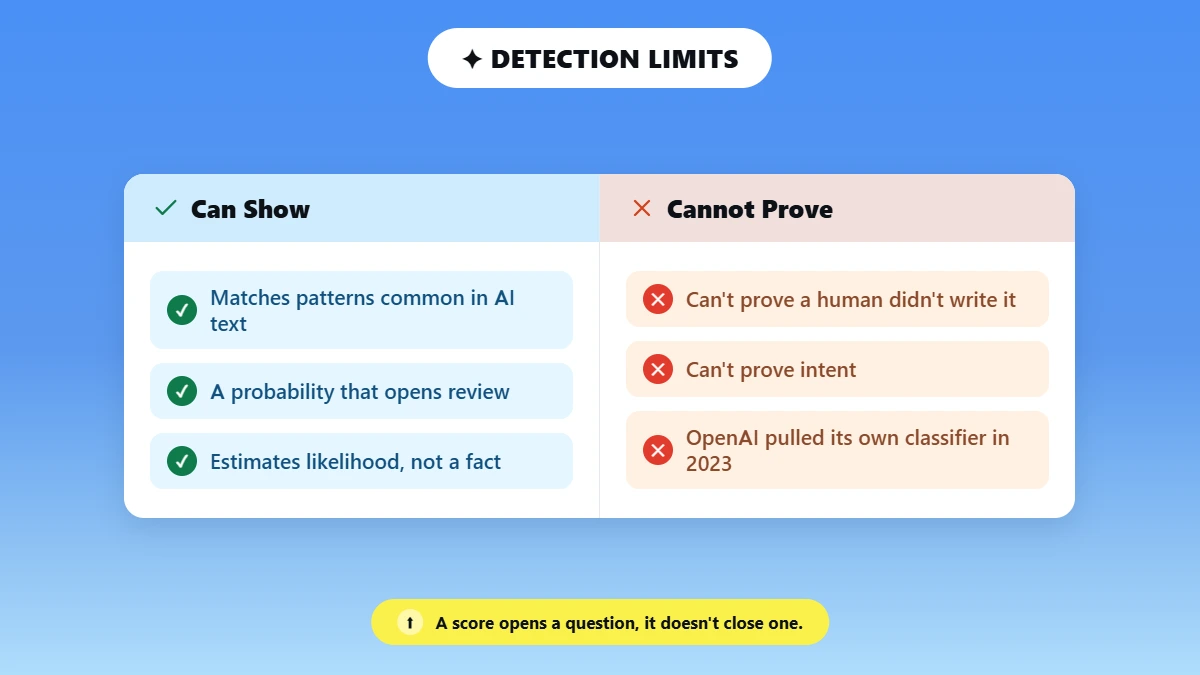
A score shows how closely a text matches patterns common in large language model output. It can't prove a human didn't write it. And it can't prove intent.
Treat every result as a probability that opens a question. Not an answer about content provenance.
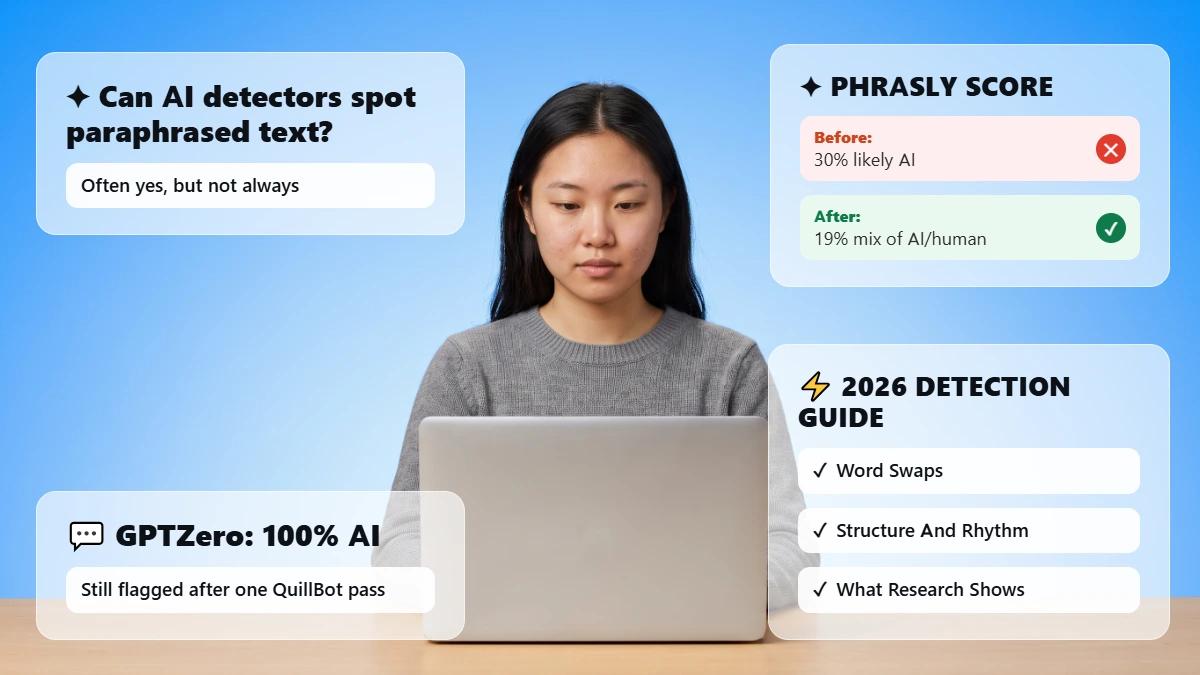
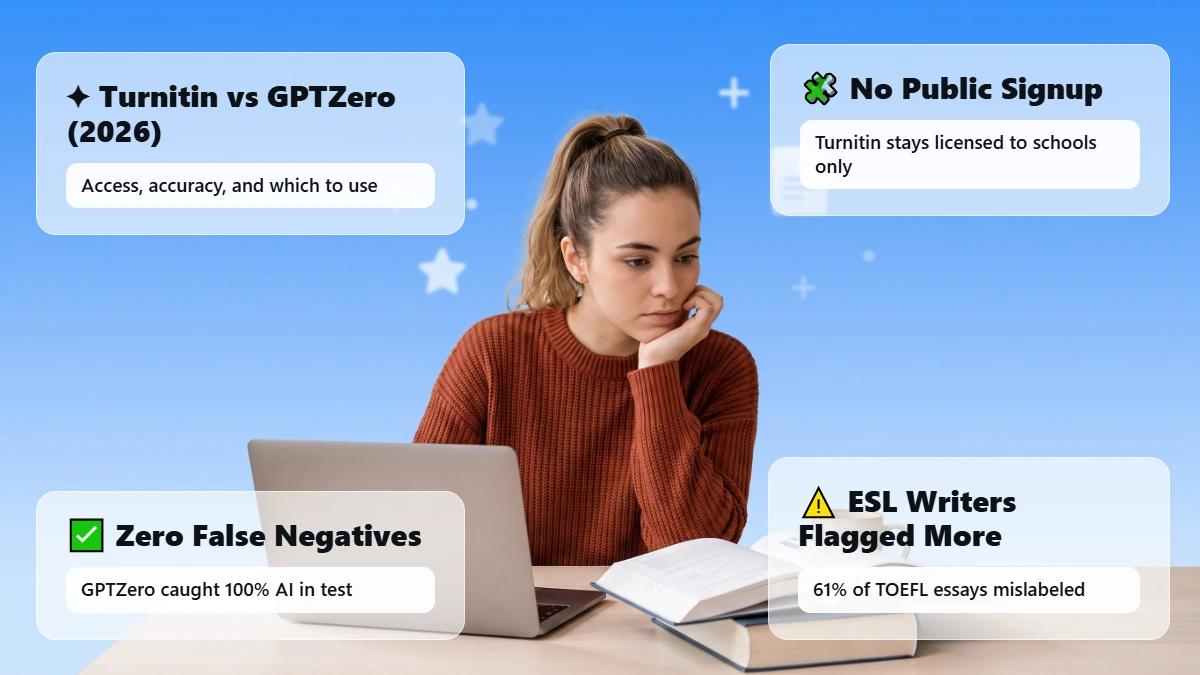
Detectors misclassified about 61 percent of essays by non-native English writers as AI in a 2023 Stanford study.
Chicago Booth research found false positive rates below 1 percent in the best commercial tools.
The gap between those numbers is why a score needs an editor's judgment.
It's a probability: A detection confidence score estimates likelihood. It isn't a yes or no fact.
It measures patterns: Detectors compare word choices and rhythm with known AI writing. Not with the writer's actual process.
It also can't name the model behind a passage; see whether AI detectors can identify which model wrote a text.
It has a track record of failure: OpenAI withdrew its own AI-text classifier in July 2023. OpenAI withdrew because its accuracy was too low to rely on.
Perplexity, Burstiness and Confidence Score, Briefly Explained
A perplexity score measures how predictable a text's word choices are to a model.
Burstiness measures how much sentence length and rhythm vary. And human writing usually scores higher on both.
Low perplexity plus low burstiness often raises an AI score. But careful human writers can produce both. Tools weight these signals differently.
Edited AI Drafts Versus Fully Human Writing
Can an AI detector tell if someone edited an AI draft themselves? Not reliably!
A heavily revised AI draft can score anywhere from low to high. And no current tool consistently separates "AI draft, edited by a human" from "written from scratch."
Why the score moves so much: Every round of human editing changes the word choices and sentence rhythm a detector measures. Light edits often leave the AI pattern intact.
A deep rewrite can erase it. Mixed drafts, with some paragraphs AI-written and others human, tend to land in the middle.
Automated rewriting is a different case. Chicago Booth's researchers found Pangram held up against “humanizer” tools. But careful human revision is much harder to benchmark.
What to check instead of the score alone:
Draft history: Version history in Google Docs or Word shows whether the piece was written over time or pasted in at once.
Past work: Compare the voice and structure with the writer's earlier pieces for you.
Facts and sources: Invented quotes, vague citations, or sources that don't say what the draft claims are a stronger warning sign than any percentage.
If your policy allows AI-assisted drafting with disclosure, an edited AI draft may be acceptable anyway. The question to settle is whether the writer disclosed it. Not what the detector guessed.
False Positives and Non-Native English Writers: The Real Risk
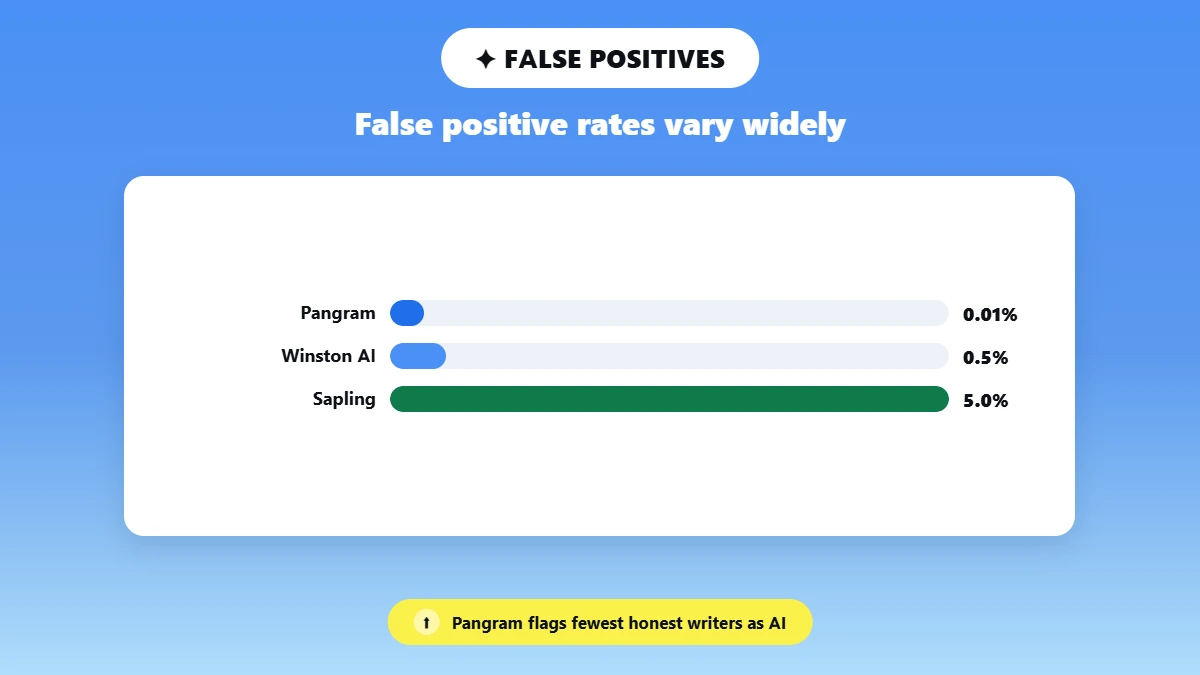
False positives hit non-native English writers hardest. Simpler sentence structures and careful, formal phrasing can look statistically like AI output.
That makes the AI detector false positive rate a fairness issue for your contributors. Not just a technical one.
In Liang et al. (2023), seven detectors misclassified about 61 percent of TOEFL essays written by non-native speakers as AI-generated. They were near-perfect on essays by US eighth-graders.
Benchmark firm DetectArena reports a wide range across tools. Pangram at 0.01 percent. Winston AI at 0.5 percent. And Sapling at 5.0 percent.
Do the math before you set a policy. At a 1 percent false positive rate, a site publishing 500 articles a month wrongly flags 5 honest pieces every month.
Before you pick a cut-off, read what AI detection percentage is acceptable.
The opposite error. The false negative rate decides how much AI text slips through.
How reliable are detectors for freelance submissions? Reliable enough to start a review. Never to end one.
For real cases of misfires, see can AI detectors be wrong.
Originality.ai vs Winston AI vs Pangram: Comparing Detectors for Editorial Teams
Independent research favors Pangram for low false positives. Originality.ai trades a higher miss rate for low false flags. And Winston AI's headline accuracy is a vendor claim.
Any best AI detector for publishers 2026 list should start from independent tests. Not marketing numbers.
For one example, see this test of nine AI checkers.
In the Chicago Booth working paper by Jabarian and Imas, Pangram's accuracy never dropped below 99.8 percent. And all three commercial tools kept false positives under 1 percent.
Originality.ai, though, missed 10 to 40 percent of AI text depending on the model. Winston AI's 99.98 percent accuracy figure is self-reported. Hasn't been independently confirmed.
This Winston AI review covers how it performs in practice.
Tool | Reported accuracy / false positive rate | Source | Publisher-relevant note |
Pangram | 99.8%+ accuracy; 0.01% false positive rate | Chicago Booth working paper; DetectArena | ✅ Lowest false positive rate in independent testing |
Originality.ai | Missed 10 to 40% of AI text, depending on model | Chicago Booth working paper | Low false positives, higher miss rate; also includes a plagiarism checker |
Winston AI | 99.98% accuracy (vendor claim); 0.5% false positive rate | Third-party reviews; DetectArena | ⚠️ Vendor claim, not independently verified |
Sapling | 5.0% false positive rate | DetectArena | ⚠️ Lowest cost at scale, highest false positive risk |
QuillBot | Caught 98 to 100% of AI text in one tester's trial | Independent Substack review | No publisher-specific false positive data |
Proofademic | 99.8% detection accuracy (vendor claim) | Independent Substack review | ⚠️ Treat as an unverified vendor claim |
DetectArena and Substack figures are third-party or vendor reports. Not peer-reviewed. Checked October 18, 2026.
Cost matters too. In DetectArena's pricing snapshot for 500 articles a month (500,000 words), costs ranged from $2.50 with Sapling to $75.00 with GPTZero. A gap that compounds for high-volume newsrooms.
If GPTZero is on your shortlist, check how accurate GPTZero is first.
What to Weigh Beyond the Headline Score?
The real difference between these tools is their error trade-offs. Use this AI detection tools comparison checklist:
False positive rate first: Wrongly flagging an honest contributor costs a relationship. So weigh it above headline accuracy.
Latency at volume: DetectArena measured Pangram at 245ms. Originality.ai at 280ms per check. This adds up across hundreds of submissions.
Independent testing: Prefer vendors with third-party results over self-reported accuracy alone.
Write a Submission Policy That Sets Expectations Upfront
A submission policy works only if writers see it during writer onboarding. Before any flag happens. Good AI content policy enforcement for publishers starts with the contributor agreement. Not with an accusation.
Every policy needs three parts: A disclosure rule (what counts as AI assistance versus AI generation). The review process for a flagged submission. And a consequence ladder (clarification, revision, kill fee, termination).
"No AI use" is nearly impossible to verify. So a workable content moderation policy asks for disclosure. And treats undisclosed full AI generation as the line that triggers review.
Link it in the contributor agreement and the first assignment email. So your editorial standards apply evenly to every AI detector for freelance writers’ checks and to freelance contributor vetting.
Sample Policy Language Editors Can Adapt
"Contributors must disclose any use of AI writing tools in drafting this piece. Undisclosed AI generation may result in rejection or removal of the byline."
"Submissions may be screened with an AI detector. A flagged score opens a conversation with the editor. It is not an automatic rejection."
"Writers may be asked to share drafts, outlines, or research notes to support originality during a dispute."
What should you look for in an AI detector before you buy one for a newsroom? A low published false positive rate. Sentence-level highlights you can show a writer. And an export or log you can keep.
Raise the Flag Without Losing the Writer's Trust
Open with curiosity. Not accusation. Treat the score as one input in a human-in-the-loop review.
Try "Your draft scored higher than our usual range on an AI check. Can you walk me through how you wrote it?" instead of "This was AI-written."
Accusation-first language backfires. Especially with non-native writers flagged for style. Is it fair to reject a writer on a score alone? No!
Weigh the score alongside writing history, topic knowledge, and byline verification. The same way academic integrity cases weigh more than one piece of evidence.
Questions to Ask Before You Reject a Piece
Can you share an earlier draft or outline?
Which sources did you use, and do you have research notes?
Did you use any writing or grammar tools, and which ones?
Would you do a short revision with me, live or on a call?
Keep a Record: What to Log for a Disputed Flag
The detector name, version, and score at the time of review.
The writer's response and any drafts or notes they provided.
Your final decision and the reasoning behind it.
Set Up Your Editorial QA Workflow with Phrasly
Use Phrasly's AI detector as step one on every outside submission before the piece reaches an editor for deeper review. It's a fast first signal in your editorial workflow. Not a final ruling.
And a practical AI detector for publishers’ starting point because you can try it free.
Keep the human review step for every flag.
Plans for heavier use are on Phrasly's pricing page. Before pasting unpublished freelance drafts into any tool, check its data policy; this guide on whether it's safe to paste an essay into an AI detector covers what to look for.
Academic Journals Versus Newsroom UGC: Same Signal, Different Stakes
An AI detector for journals and academic publishing and an AI detector for newsrooms use the same signal. But the stakes differ:
📚 Academic Journals
Lower tolerance for false negatives. And slower, peer-reviewed cycles. A missed AI manuscript can mean a retraction later.
Many journals follow the same tools academia uses; see which AI detectors universities use.
📰 Newsrooms and UGC
Faster turnaround, higher volume, and lower stakes per piece. With room for a second editorial check before rejecting anything.
When a Team Needs the API Instead of One-Off Checks
Volume: More than a handful of submissions a week makes manual checks a bottleneck.
Integration: An AI content detection API for publishers can screen each submission automatically when it hits the queue. Phrasly offers a Business API for AI detection.
Which AI detector works best for a publishing team? One you'll run on every submission the same way, with a low false positive rate. And records you can keep.
For the two tool types, see the difference between a checker and a detector.
Add a First Check to Your Editorial QA Workflow
Run every outside submission through Phrasly's AI Detector before it reaches an editor. Then use the flagged sentences to start the conversation with your writer. Not end it.
Frequently Asked Questions
How Do AI Detectors Work for Publishers?
Detectors score text with statistical signals such as perplexity and burstiness. Then estimate the probability it was machine-generated. They return a confidence percentage. Not a yes or no verdict.
For the full mechanism, read how AI detectors work. Treat the result as a triage signal that feeds editorial judgment rather than proof of authorship.
Does an AI Detector Work for New Authors' Submissions?
Yes, detectors score any submission regardless of the author's history. But new writers have no baseline to compare against. So a flag is harder to interpret. Give first-time submissions extra manual review before acting on a high score.
How Accurate Are AI Detectors for Editorial Use?
It depends on the tool. In Chicago Booth's tests, Pangram stayed above 99.8 percent accuracy. Originality.ai missed 10 to 40 percent of AI text. No detector is perfect. So every score still needs human review.
See this current accuracy and false positive data.
What Is the False Positive Rate of AI Detectors?
It varies widely by tool. From near zero to several percent in published benchmarks. And it rises for non-native English writers and formulaic writing.
Read this guide to protecting non-native writers from false flags before setting a threshold.
Can AI Detectors Tell the Difference Between Edited AI Drafts and Human Writing?
Not reliably! Heavy human revision changes the statistical patterns detectors rely on. So edited AI drafts can score anywhere. Treat any score as one input alongside your submission policy and an editor's judgment, never as a final verdict on authorship.

Written by
Muhammad Usman Ali
Pakistan
Muhammad Usman Ali is an experienced SEO content writer with 3+ years of professional writing experience. He specializes in AI tools, AI detection technologies, and search engine optimized content.