Does Grok Leave a Watermark in Its Text? What xAI Marks in 2026
11 min read
No documented watermark exists for Grok's text, as of October 2026. Grok images and videos are a different story.
xAI's official Grok FAQ says they carry a visible Grok watermark.
No setting to remove it.
That makes Grok the outlier among the big chatbots. Anthropic now marks text from supported Claude models. Google uses SynthID in Gemini. Copied Grok text can still pick up hidden characters and still get flagged by AI detectors. But neither of those is a watermark.
Below: What xAI confirms. What our same-day copy test found. And how to clean up Grok text before you publish it.
Clean Up Grok Text with Phrasly's AI Text
Paste your Grok text to tidy formatting and smooth stiff wording. Review the result before you publish.
Does Grok Leave a Watermark in Its Text?
Grok has no documented text watermark as of October 2026. xAI's Grok FAQ mentions watermarks only for generated images and videos. xAI offers no tool to check Grok text for a hidden signal.
That is a documentation finding. No public test can rule out an undisclosed statistical mark.
So if you're asking whether Grok watermarks text or does Grok leave watermarks in an essay or email, the honest answer is "not that xAI has documented."
Here's how the three kinds of Grok output compare:
Grok output | Watermarked? | What xAI documents | What to do next |
Chat text | ❓ No documented watermark | The FAQ is silent on text; xAI offers no checker | Review and edit it (see the clean-up steps below) |
Generated images | ✅ Yes, a visible Grok watermark | "No setting to remove" it; the Acceptable Use Policy bars removal | Keep the label and design around it |
Generated videos | ✅ Yes, a visible Grok watermark | The same FAQ answer as images | Check the original export, not a repost |
Source: xAI Grok FAQ and Acceptable Use Policy. Last checked October 17, 2026.
A text watermark, where one exists, is a statistical pattern in word choices rather than a visible label.
Google's SynthID, for example, adjusts the probability of word choices as text is generated.
Building on methods like Kirchenbauer et al. (2023).
Neither tells us anything about Grok.
For the basics, see this guide to AI text watermarks.
One detail can mislead readers.
xAI's Acceptable Use Policy (effective August 14, 2026) bans stripping.
Altering or circumventing embedded provenance metadata or watermarks.
That is a rule for users. Not proof that xAI marks Grok text. It applies wherever a mark exists. Such as Grok images and videos.
How Does Grok Compare with Other AI Chatbots?
Grok stands out. xAI documents no text watermark. xAI has announced no plan for one. Claude and Gemini mark text today. OpenAI has announced an EU rollout for ChatGPT.
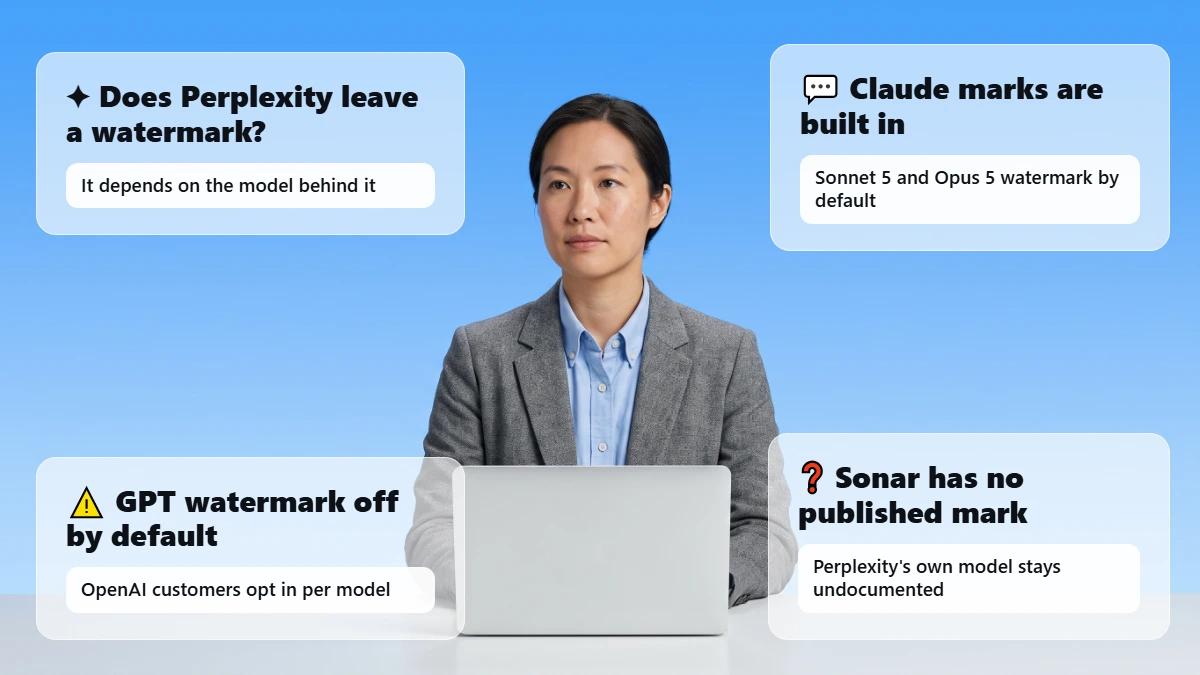
And tools that run other companies' models, like Copilot and Perplexity, depend on the model behind the answer.
Provider | Text watermark status (as of October 14, 2026) | Phrasly deep-dive |
Grok (xAI) | ❌ None documented | This article |
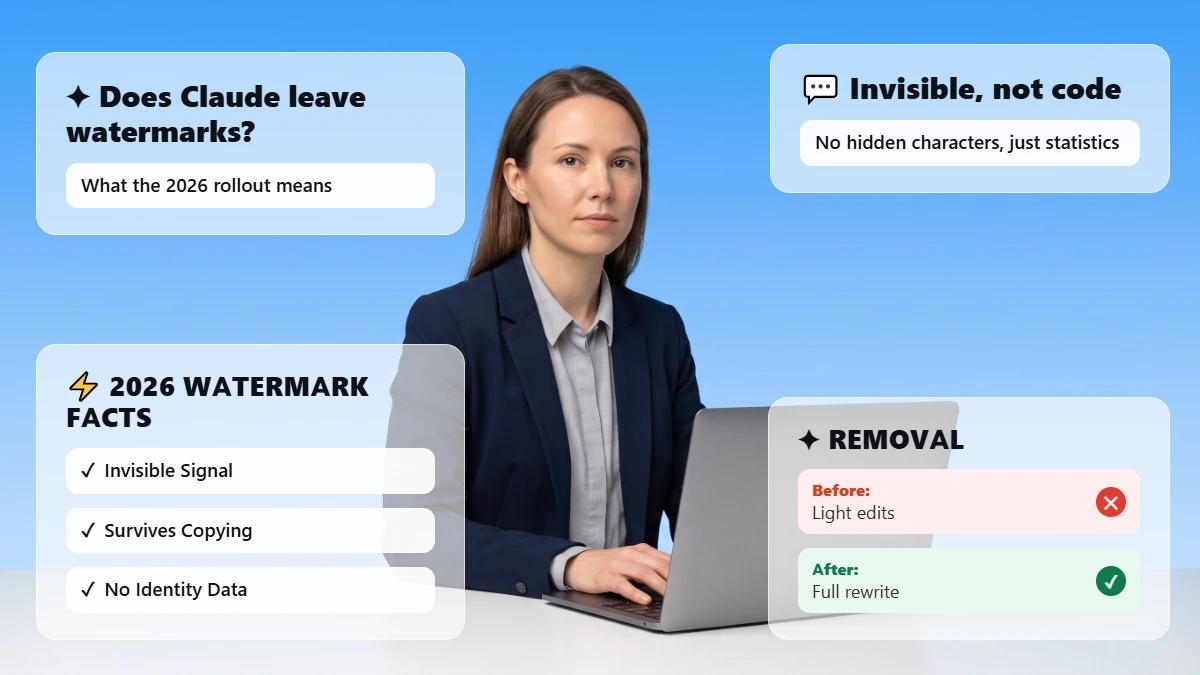
Claude (Anthropic) | ✅ Yes, on supported models. Newer models are marked at launch | |
Gemini (Google) | ✅ Yes, SynthID text watermark in the Gemini app | |
ChatGPT (OpenAI) | ⚠️ Announced October 5, 2026 for ChatGPT text in the EU (textGrain). Off by default in the API | |
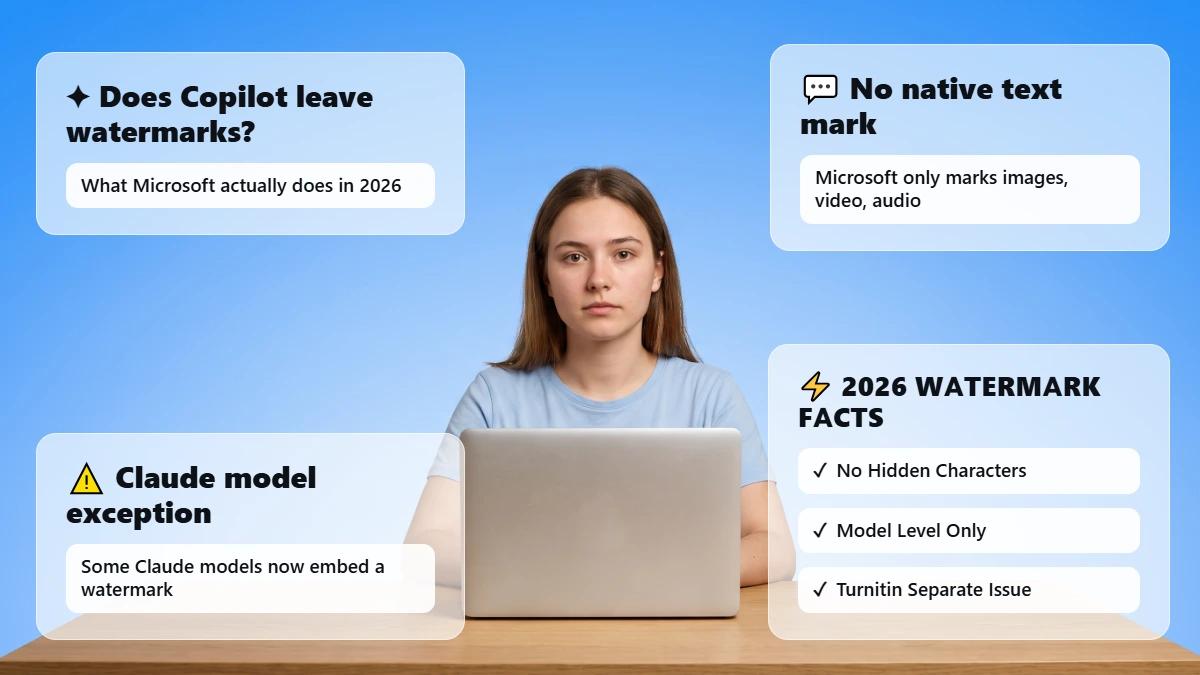
Copilot (Microsoft) | ❓ No native text watermark. Depends on the underlying model | |
Perplexity | ❓ Depends on the model that writes the answer |
Provider policies change quickly. Every row checked October 17, 2026.
Why Is Grok the Outlier?
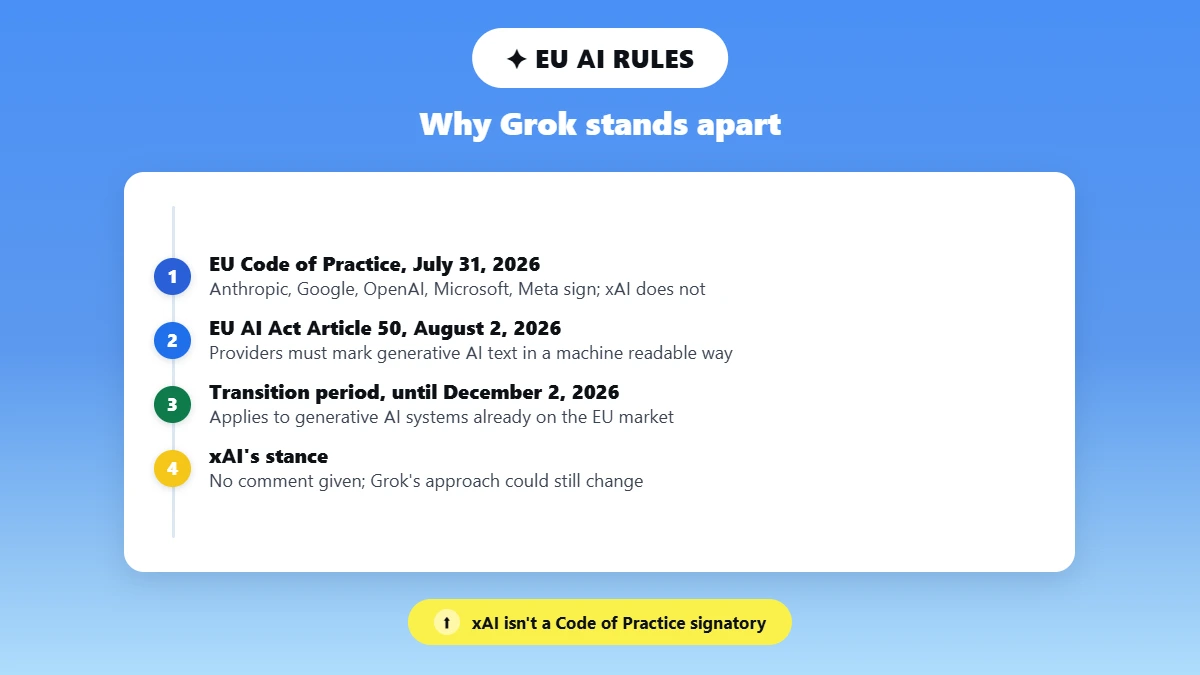
xAI is not listed among the signatories of the EU's Code of Practice on transparency of AI-generated content. Anthropic, Google, OpenAI, Microsoft, and Meta signed it. The code is voluntary.
The EU AI Act's marking rules are not. So Grok's approach to text could still change.
The European Commission's July 31, 2026 announcement lists the signing companies.
xAI is not among them.
City AM reported on August 12, 2026 that ChatGPT might follow Claude's pledge while Grok would swerve it.
xAI did not comment.
The law is the bigger factor. Under Article 50 of the EU AI Act, providers of generative AI must mark synthetic text in a machine-readable way.
Obligations apply from August 2, 2026.
A transition period until December 2, 2026, applies to generative AI systems already on the EU market before that date.
Will Grok watermark text? Possibly. We'll update this page if xAI documents a change.
Does Grok Watermark Images and Videos?
Yes! xAI's Grok FAQ says generated images and videos include a Grok watermark to show they were made with AI. There is no setting to remove it. And removing or obscuring it breaks xAI's Acceptable Use Policy.
No plan, aspect-ratio, or prompt exception is documented.
That covers the Grok image watermark and the Grok Imagine watermark on video. So, does Grok AI add watermarks to generated videos? Yes, under the same FAQ answer.
And the FAQ adds that labeling AI media may be legally required in some places.
People also ask, "Does Grok put watermarks on images 9:16 with no text?" The FAQ lists no exception by aspect ratio, prompt, or plan. A prompt asking for no lettering in the scene is not the same as the provider's label. This xAI adds itself.
The same goes for the SuperGrok watermark. No plan-level exception is documented.
A visible label is also different from signed provenance data.
Such as Content Credentials (C2PA), which records an image's origin in its metadata.
xAI does not document whether Grok files carry Content Credentials, and sources disagree.
So we make no claim either way.
What We Found When We Copied Grok Text
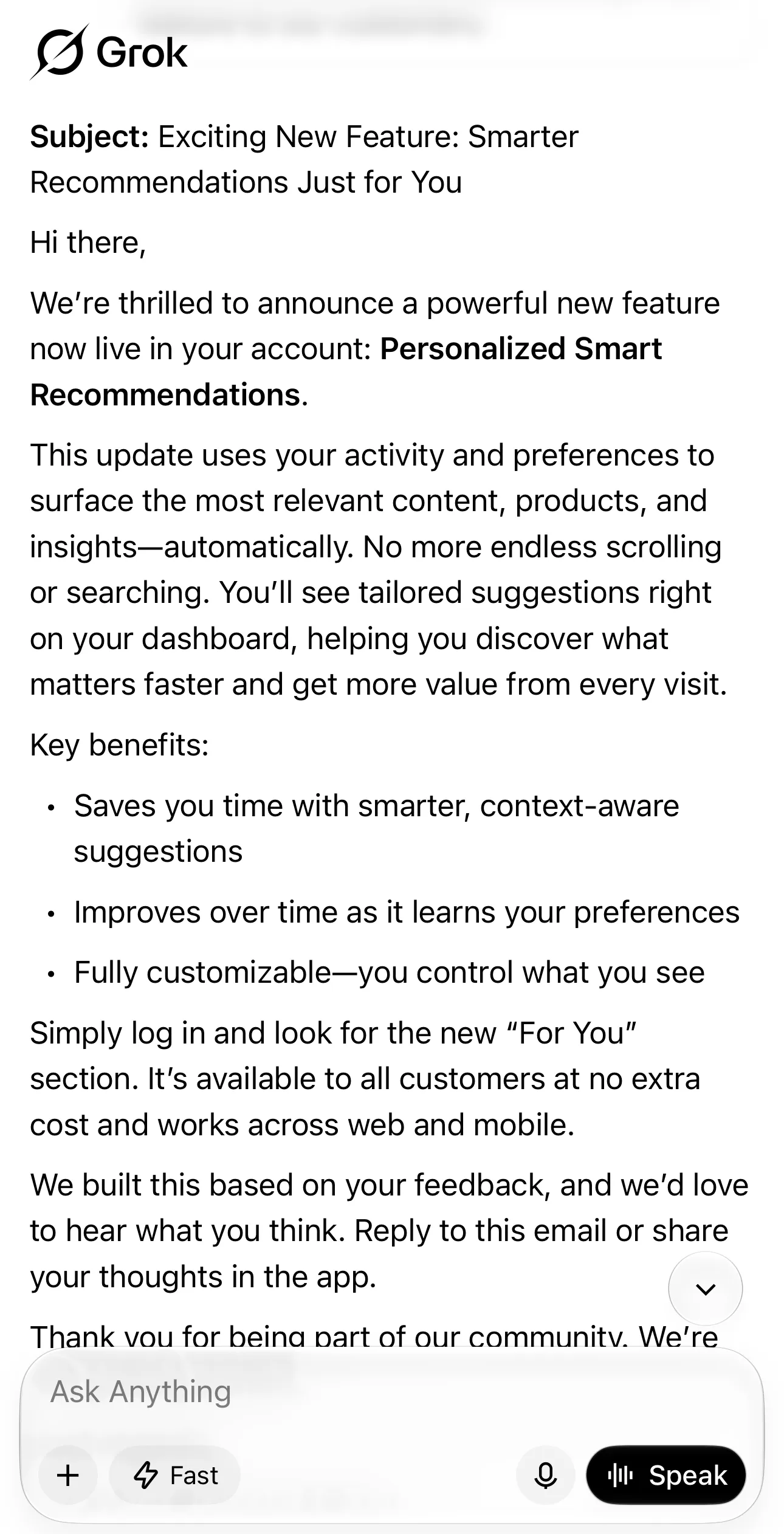
In our October 17, 2026 test, none of the 3 Grok samples contained hidden format characters. And neither did our hand-typed control. What we found was visible formatting.
Markdown asterisks from the grok.com copy button, bullet symbols from the app, and typographic dashes. None of these is a documented Grok watermark.
Method: On October 17, 2026, we asked Grok for a 150-word customer email announcing a new feature. We used the same prompt on two surfaces: grok.com and the Grok iOS app. And wrote a human control by hand. We recorded the surface.
The model name Grok showed (Grok 4.5, Fast mode), the free plan, and the copy path.
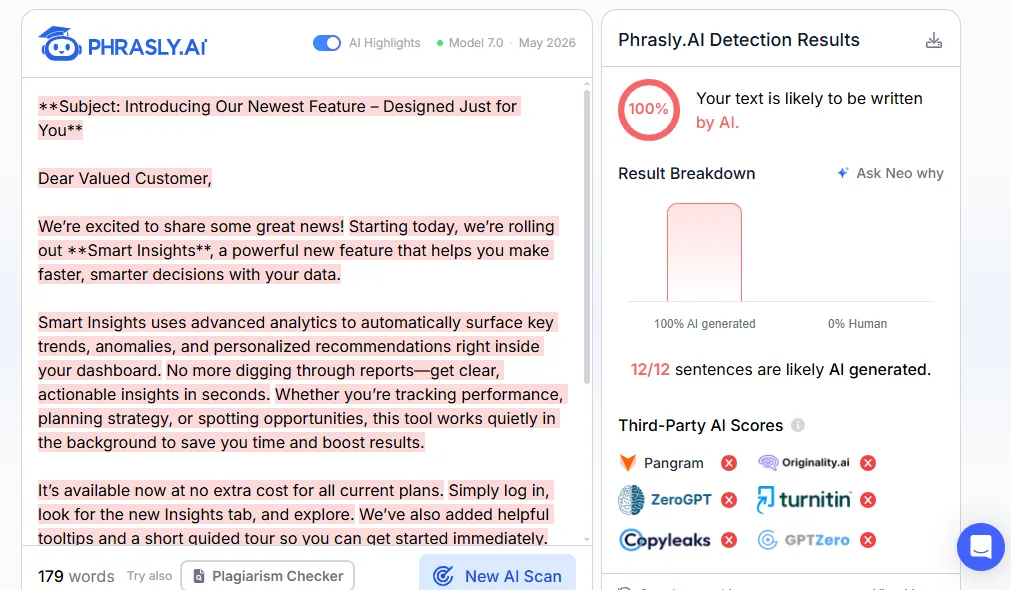
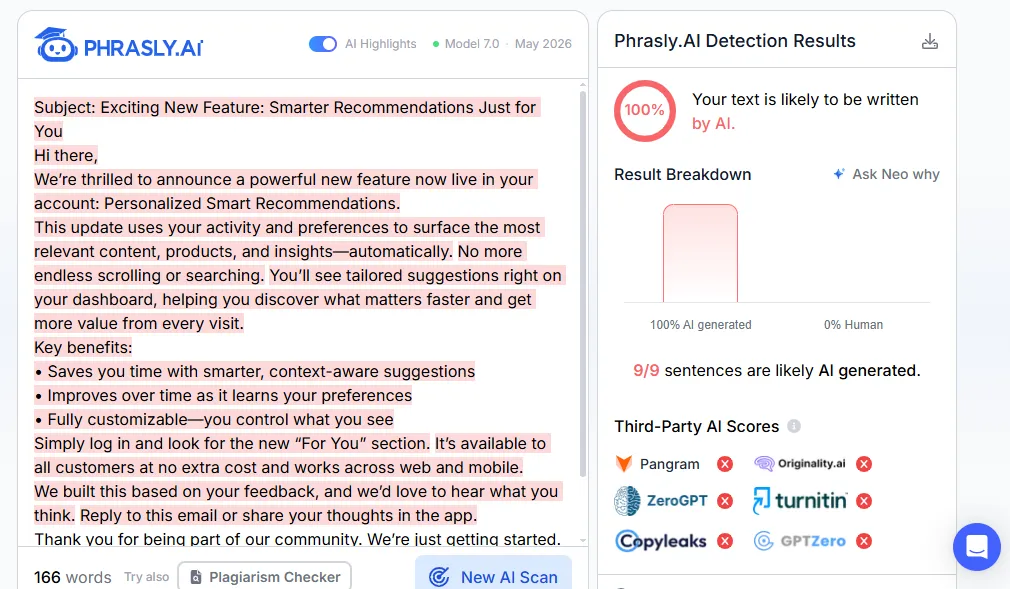
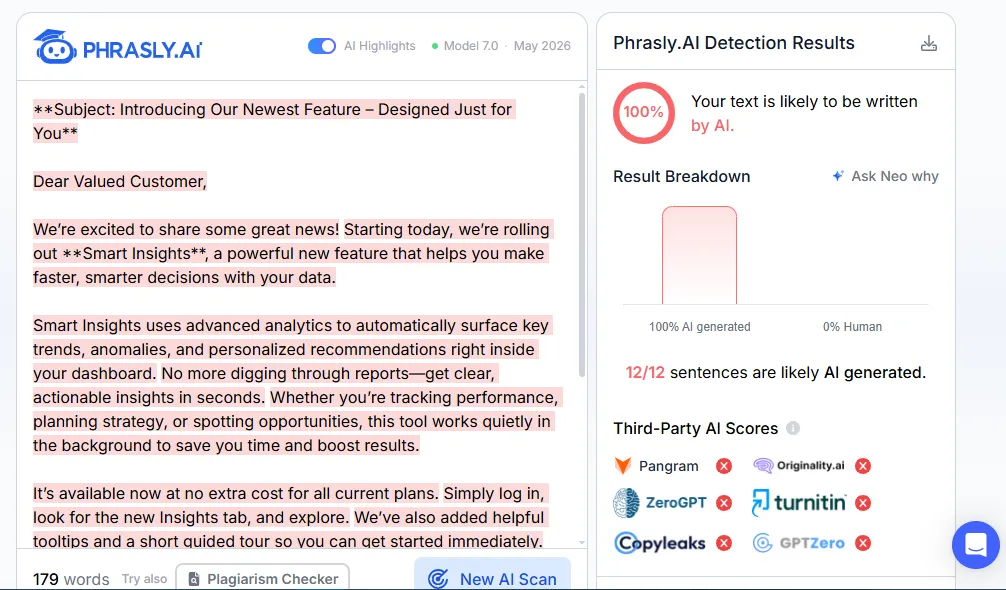
Then scanned each file for hidden characters and ran it once through Phrasly's free AI Detector.
Gives 3 free checks and then free use with a free account.
Sample | Surface and copy path | Hidden characters found | AI Detector result | Notes |
S1 | grok.com, copy button, .txt | None | 100% AI; 12/12 sentences likely AI | 8 markdown asterisks, 1 em dash, 1 en dash, a trailing-space line break |
S2 | Grok iOS app, copy, then WhatsApp and Gmail, .txt | None | 100% AI; 9/9 sentences likely AI | 3 bullet symbols (•), 2 em dashes; bold copied as plain text. Passed through two apps, so this can't show what the app itself adds |
S3 | S1 via a Google Docs round trip, .txt | None | 100% AI; 12/12 sentences likely AI | 2 extra blank lines at the end; otherwise identical to S1 |
S4 (human) | Typed in Google Docs, .txt | None | Human; 0% AI; 0/10 sentences likely AI | No false positive; plain keyboard text only |
One day's sample, one scan per file. Tested October 17, 2026.

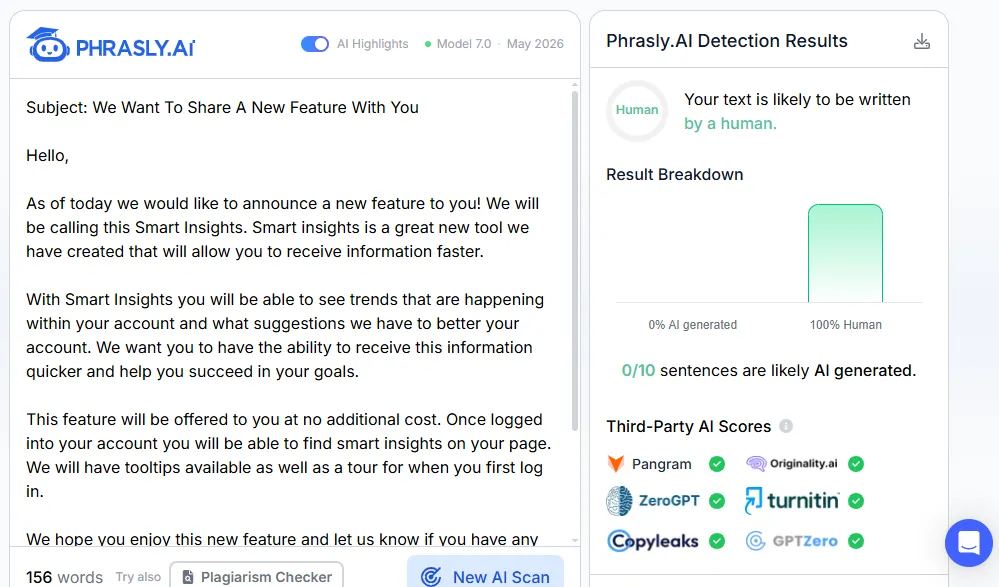
A detector score is a separate signal from a watermark. So we report both without merging them. And a clean scan cannot rule out an undisclosed statistical watermark. This is one day's sample. Not a verdict on every Grok output.
Are Hidden Characters in Grok Text a Watermark?
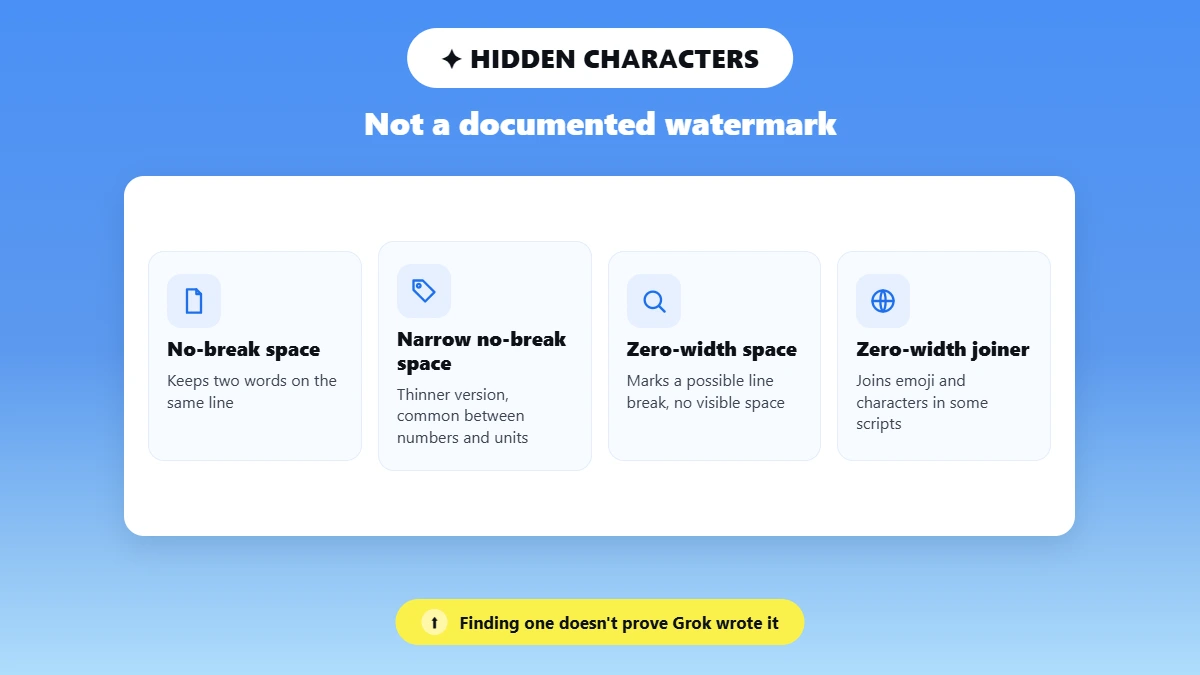
No! Characters such as the no-break space (U+00A0) or zero-width space (U+200B) can appear in copied Grok text. But they also appear in human writing, web pages, and editors.
xAI does not document them as a watermark. And finding one does not prove Grok wrote the text.
🔤 Grok Hidden Characters Worth Knowing
U+00A0 no-break space: Keeps two words on the same line.
U+202F narrow no-break space: A thinner version, common between numbers and units.
U+200B zero-width space: Marks a possible line break without showing a space.
U+200D zero-width joiner: joins emoji and characters in some scripts. So it has real jobs.
These come from interfaces, rendering, editors, and copy paths. OpenAI has described a narrow no-break space in ChatGPT output as a training artifact. Not a watermark.
That's OpenAI's statement about ChatGPT, covered in this ChatGPT watermark guide.
Deleting them fixes formatting. It does not remove a statistical watermark where one exists. And keeping them proves nothing about Grok. Don't strip characters blindly in multilingual text, names, emoji, or code. Do not strip where they can be doing real work.
So a Grok invisible watermark made of hidden characters isn't something xAI has documented.
Can AI Detectors Tell That Text Came from Grok?
Not reliably! AI detectors estimate whether text reads as machine-written. They don't read a Grok watermark. Because xAI documents none. Most detectors also can't name the model behind a passage with confidence.
A high AI score means the text looks AI-written. Not that Grok wrote it.
A classifier guesses from writing patterns. A watermark verifier, by contrast, checks for a specific provider's signal using that provider's key.
So is Grok detectable? Grok text can be flagged like any AI text. But not identified as Grok's through a watermark. Online "Grok watermark checker" tools only scan for characters. And they can't verify a mark that isn't documented.
Model attribution is shaky too.
As this look at whether AI detectors can tell which model wrote a text explains.
In our test, Phrasly's AI Detector rated all three Grok samples 100% AI. And our hand-typed control as human, with no false positive on S4. That shows the text reads as AI-written. Not that it came from Grok.
Can You Remove a Grok Watermark?
For images and videos, no! xAI offers no removal setting. Its Acceptable Use Policy prohibits stripping or altering watermarks and provenance data. For text, there's no documented Grok watermark to remove.
What you can do is fix stray formatting. And rewrite stiff phrasing in a draft you're allowed to edit.
When people ask whether Grok removes watermarks, they usually mean asking Grok to edit a watermark out of an image. xAI's policy bars stripping or altering watermarks and provenance data. And removing someone else's mark raises rights issues too.
The same applies to the broader question: can AI like Grok or ChatGPT remove watermarks from images? The platforms' own rules say no. So a Grok remove watermark search has no legitimate shortcut for media.
📝 What About Grok Text?
Tools sold as a "Grok watermark remover" for text mostly delete hidden characters. And a rewrite changes the wording. Neither proves removal of a signal that isn't documented.
This guide to removing AI watermarks from text covers what each method does. And the ethics of removing a text watermark covers when not to.
Have Grok text, not an image? You can clean up Grok text with the Watermark Remover from Phrasly. It tidies formatting and rewrites stiff phrasing. Review the result before you use it.
How Should You Clean Up Grok Text Before Publishing?
Save the original. Paste it as plain text. Fix the formatting problems you can see. Check every fact and source, then edit for your reader. Finally, check whether your school, client, or platform requires you to disclose AI help.
Cleanup improves the draft. It doesn't change where the first version came from.
Keep the original. Save Grok's answer with its sources and the date. And where it came from (grok.com, X, or the app).
Fix what you can see. Paste as plain text. Then remove markdown asterisks, stray headings, broken lists, and odd spacing.
Plain-text paste can still keep invisible characters. See this roundup of AI text cleaners.
Verify facts and sources. Grok can pull in web results and posts from X. Open each source. Check dates, names, numbers, and quotes.
Edit for your reader. Cut vague phrasing and make claims specific. Illustrative example. Not a Grok or Phrasly test:
"Our innovative solution enables teams to streamline their processes" becomes "Use the shared checklist to review the draft, assign fixes, and approve the final copy."
Want a faster step 4? Start Phrasly's AI watermark remover free trial. Then compare the rewrite with your original line by line.
Check disclosure rules. Follow your school’s, client's, or platform's AI policy. In the EU, AI-generated text published to inform the public on matters of public interest may need disclosure. Unless a person reviews it and takes editorial responsibility.
Frequently Asked Questions
Does SuperGrok Remove the Grok Watermark?
No plan-level exception is documented. xAI's FAQ says there is no setting to remove the watermark from generated images and videos. And it doesn't tie that to any plan. Check the current plan page before assuming a paid tier changes this.
Does Pasting Grok Text as Plain Text Remove a Watermark?
Plain-text paste strips bold, links, and rich formatting. But it can keep invisible Unicode characters. It can't remove a statistical watermark. A statistical watermark lives in word choices. And none is documented for Grok text. See how to detect an AI watermark.
Can Turnitin Detect Grok Text?
Turnitin may flag Grok text as likely AI-written if it reads like machine text. As with other chatbots. It isn't reading a Grok watermark. Treat any score as a reason to review. Not proof. Learn how AI detectors work.
Will Grok Start Watermarking Text?
Possibly! The EU AI Act requires generative AI providers to mark synthetic text in a machine-readable way. And xAI hasn't documented a Grok text watermark yet. We'll update this page if that changes.
Does the Grok API Watermark Text?
xAI's API documentation does not describe a text watermark as of October 17, 2026, when we checked. Check the docs and terms for your integration. API and app behavior can differ.
Can Phrasly Remove a Grok Image or Video Watermark?
No! Phrasly's AI Text Watermark Remover works on text only. It can't erase a mark from an image or video. And it doesn't verify removal of a Grok-specific signal. Since none is documented for text.

Written by
Muhammad Usman Ali
Pakistan
Muhammad Usman Ali is an experienced SEO content writer with 3+ years of professional writing experience. He specializes in AI tools, AI detection technologies, and search engine optimized content.