Anthropic Is Watermarking AI Text. Phrasly Is the Only Humanizer That Still Passes
Most humanizer tools run ChatGPT or Claude behind the scenes, so the watermark comes right back. Phrasly runs models we built ourselves. Here is what that means in practice.
5 min read
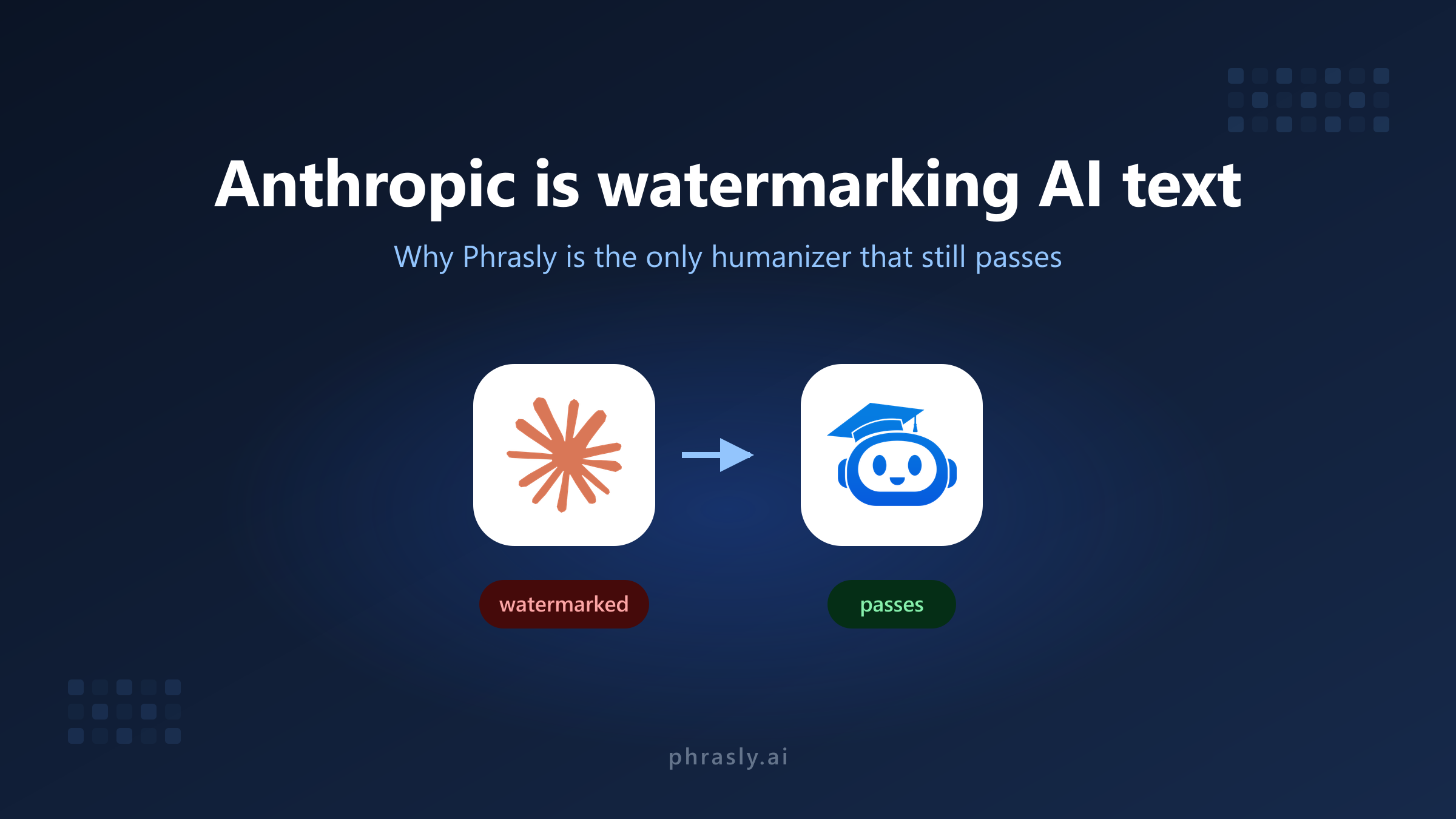
Anthropic has started watermarking the text Claude writes. The watermark is invisible to readers, survives editing, and lets detection tools flag Claude's writing with very high confidence.
When it shipped, most AI humanizers stopped working overnight. Phrasly did not.
The difference comes down to one design decision. Most humanizer tools run ChatGPT or Claude behind the scenes. Phrasly runs models we built ourselves. This post walks through how the watermark works, what most humanizers actually do with your text, and why that one decision now separates tools that pass from tools that do not.
In short: most humanizers send your text to ChatGPT or Claude with a special prompt. Those models re-add the watermark with every rewrite. Phrasly's models are built and trained in-house, so there is no watermark to add back. Right now, that makes Phrasly the only humanizer that still passes.
How does the watermark work?
There are no hidden characters and no secret metadata. The watermark lives in word choice.
Every time a language model writes, it chooses between several plausible next words: quick, fast, rapid. A watermarking model leans toward certain options, following a pattern set by a secret key. Any single choice looks normal. Across a few hundred words, the pattern becomes unmistakable to software that knows the key.
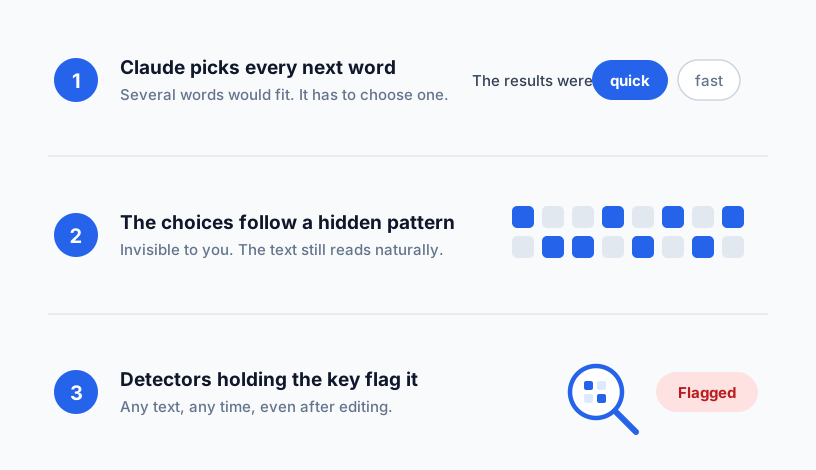
Two properties follow from this design:
Editing does not remove it. Swapping words or reordering sentences leaves most of the pattern in place.
You cannot see it. There is nothing to find and delete. The watermark travels with the writing itself.
The only reliable way to remove it is to have a different model, one that does not watermark, rewrite the text completely. That detail decides which humanizers survive this update.
What do most humanizer tools actually do?
Most humanizer tools do not have models of their own. When you paste your text, the website forwards it to ChatGPT or Claude with a prompt along the lines of "rewrite this so it sounds human", then shows you the response.
In other words: you are paying for ChatGPT with extra steps.
They take your text, send it to the same service you could use yourself, slap their logo on it, and charge you for it. The result? Text that still sounds like AI, because it is.
That is from our technology page, written well before watermarking made the problem visible.
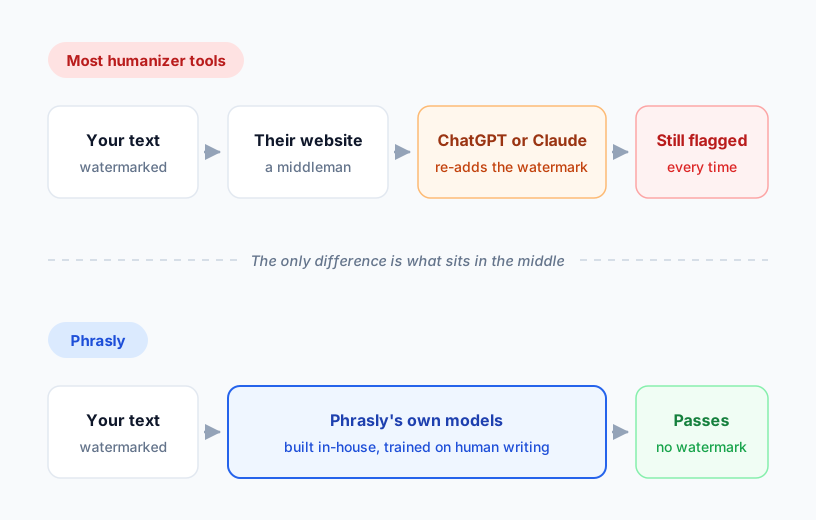
This design was always fragile. The output still comes from ChatGPT or Claude, so it keeps their habits: the same favorite words, the same evenly balanced sentences, the same structure detectors are trained on. A prompt changes the instructions. It does not change the writer. This is why those tools struggled with Turnitin and GPTZero long before watermarks existed.
Why can't they remove the watermark?
Follow your text through one of these tools. The watermarked draft goes in. The backend asks ChatGPT or Claude for a rewrite. That rewrite is generated the way all of their text is generated, one word choice at a time, so it comes back watermarked again.
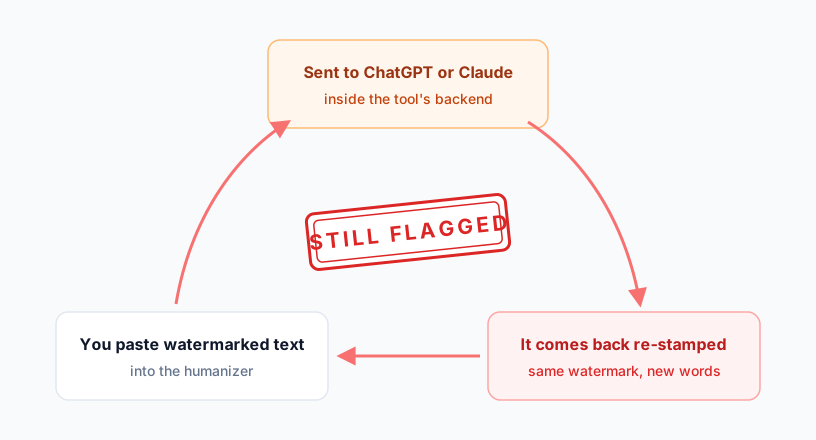
No prompt avoids this. The watermark is a property of the model doing the writing, and in these tools, the model doing the writing is the one that watermarks.
Most humanizers | Phrasly | |
|---|---|---|
What rewrites your text | ChatGPT or Claude, via their APIs | Models we built and trained ourselves |
Where your text goes | Third-party servers | Servers we own |
Watermark in the result | Re-added with every rewrite | None to add back |
When detectors update | Wait on OpenAI or Anthropic | Our team retrains, daily |
What does Phrasly do differently?
Phrasly does not send your text to OpenAI or Anthropic. Every model in our humanizing pipeline was designed, built, and trained by our own team, on our own hardware, for one job: producing text that reads the way people actually write.
The pipeline, briefly:
Collect real human writing. We ethically build datasets of hundreds of millions of human-written words across every topic.
Train and fine-tune. We fine-tune on that data, then run reinforcement learning on top, teaching the models how real people write.
Test against every checker. Each release is benchmarked against the top AI checkers, including Turnitin and GPTZero, before it ships.
Keep adapting. A dedicated team monitors detectors daily and retrains our models as they change.
Because no third-party model touches your writing, there is no watermark to inherit. This is why the update that ended most of the market did not affect us, and it is part of why more than 3 million writers use Phrasly. The full architecture is on our technology page.
A watermark added by someone else's model can only be avoided by not using someone else's model. Right now, Phrasly is the only humanizer built that way.
How can you tell what a humanizer runs on?
No tool advertises its backend, but a few checks reveal it:
Look for a technology page. If a tool cannot explain what models it runs and how they were built, the answer is usually ChatGPT. Here is ours.
Watch what happens during outages. If the tool goes down whenever OpenAI or Anthropic does, that is the backend showing.
Read the privacy policy. Tools that send your text to other companies have to disclose it, usually in the data-processing section.
Compare outputs across tools. Run one paragraph through three of them. If the results share the same pet phrases, they share a backend.
Compare failures too. Same flagged sentences and same detector scores usually mean the same model underneath.
A quick experiment: humanize the same paragraph with a few different tools, then check each result with our free AI detector. The ChatGPT-based results tend to cluster.
Test it yourself
Do not take our word for it. Paste AI-written text below, humanize it, and run the result through any detector you like.
The bottom line
The watermark lives in the model's word choices. Editing and copy-pasting do not remove it.
Humanizers that run on ChatGPT or Claude re-add it with every rewrite. They cannot fix this without replacing their entire backend.
Phrasly's models are built and trained in-house, so there is no watermark to add back.
The watermark did not end AI humanizing. It ended humanizing built on someone else's model. Phrasly was never built that way, which is why it is the only humanizer that still passes.
Frequently asked questions
What is an AI text watermark?
A hidden pattern in the way the AI picks its words. Each time the model chooses the next word, it leans toward a secret pattern. The text reads naturally to any human, but detection software holding the key can spot the pattern and flag the text as AI-generated.
Can editing a few words remove an AI watermark?
No. The watermark lives in the overall pattern of word choices across the whole text, not in any single word or hidden character. Swapping words or reordering sentences leaves most of the pattern intact. Only a genuine full rewrite, by a human or by a different, unwatermarked AI, erases it.
Why can't other humanizers remove the watermark?
Because most of them use ChatGPT or Claude in the backend. Your text gets sent to the same AIs that add watermarks, with a special prompt attached, and the rewrite comes back freshly stamped. No prompt can change the fingerprint of the model doing the writing.
Does Phrasly use ChatGPT or Claude to humanize text?
No. Humanization runs on proprietary models that Phrasly designed, built, and trained in-house, on hardware Phrasly owns. Your text is never sent to a third-party AI provider, so there is no watermark to inherit. That is what makes Phrasly the only humanizer this update cannot touch. The full architecture is at phrasly.ai/technology.
Is Phrasly really the only humanizer that beats the watermark?
Any tool with ChatGPT or Claude in the backend re-stamps the watermark by definition, and that is most of the market. Phrasly humanizes with its own in-house models, benchmarked daily against the top detectors, which is why it keeps passing when the others stopped.
How do I check that humanized text actually passes?
Run it through a detector before you use it. Phrasly benchmarks every model release against the top AI checkers, including Turnitin and GPTZero, and the built-in AI detector lets you verify any text yourself in seconds.

Written by