
Does Turnitin Detect ChatGPT? Here's What Actually Happens
Turnitin detects ChatGPT with 98% accuracy but only on raw AI text. Edited, paraphrased, or mixed content? It struggles. Here's what really happens behind the scenes.
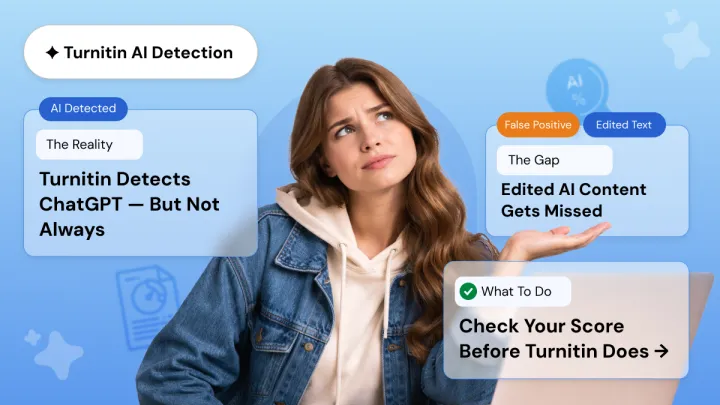
Every student who has ever typed something into ChatGPT and copied and pasted it into a Word doc has wondered the same thing: Does Turnitin detect ChatGPT?
Yes, Turnitin can catch you. But there’s a lot more to this story than you might think.
Turnitin's AI detection is not your typical plagiarism checker.
It's an advanced pattern-recognition system, and knowing how it works, where it does well, and, most importantly, where it doesn't can mean all the difference between passing it clean and getting pulled into your professor's office.
Just before you click “Submit,” you should understand what’s really going on behind the scenes.
Run your content through Phrasly AI Detector before you press submit so you know where you stand. Then read on to learn what Turnitin is really looking for.
Does Turnitin Actually Detect ChatGPT?
Yes! Turnitin can detect ChatGPT-generated AI writing. Turnitin’s AI writing detection technology works by looking for patterns in text that match what it knows about ChatGPT, GPT-3, GPT-3.5, GPT-4, GPT-4o, GPT-5 and other large language models (LLMs).
But there’s more to the story than that headline lets on. Real-world accuracy will depend greatly on how the text was written and edited. Turnitin does not have “ChatGPT” or anything like that on its database to detect.
It compares your writing to the statistical chances of certain writing being generated by AI.
There are two distinct categories:
- AI-generated text: Content likely written directly by AI
- AI-paraphrased text: Content that appears AI-generated but has been edited or rewritten
Each of these is assessed separately within Turnitin’s AI-generated report. Simply rewriting text that was originally generated by AI will not make that content unidentifiable. One limitation is that Turnitin only analyzes prose written in paragraphs.
It typically does not analyze:
- Bullet points
- Code blocks
- Tables
- Very short or fragmented text
You might also realize that certain parts of your assignment will not go through AI detection whatsoever. Turnitin has claimed its AI detector is 98% accurate. However, there’s a caveat to that statistic:
It primarily holds true for raw AI-generated text.
The real world of academia is almost never this straightforward. Students usually:
- Edit AI output.
- Mix AI with their own writing.
- Rewrite sections in their own words.
Detection rates are lower for these cases. Turnitin won't catch:
- Detecting edited AI content
- Avoiding false positives on genuine human writing
While Turnitin may catch ChatGPT easily, it’s much less reliable when it comes to edited, real-world submissions.
What AI Models Does Turnitin Detect?
Turnitin isn't just looking for ChatGPT. Turnitin's detection system is trained to recognize writing patterns from across a wide range of AI models. These include GPT-3, GPT-3.5, GPT-4, GPT-4o, Google Gemini (e.g., Gemini Pro), and Meta LLaMA.
Turnitin also said it would expand detection for new AI systems as they're released. Note that there has been no confirmation that it detects future/unreleased systems specifically, e.g., "ChatGPT 5". Claims to that effect are currently unverified.
How Does Turnitin Detect ChatGPT?
Turnitin identifies ChatGPT based on linguistic patterns found in your writing, not from copied sources. Turnitin evaluates how predictable, consistent, and structured your writing is to determine the likelihood that it was written by AI versus a human.
Rather than asking “Where did this text come from?” Turnitin asks:
“Does this text act like AI-generated text?”
Turnitin tends to be overly-cautious and conservative compared to most 3rd-party AI detectors (i.e. It wants to avoid false positives). Like everything else, its efficacy decreases with edited or blended (AI + human) text.
Perplexity and Burstiness Explained
Perplexity is a measure of how predictable your word choices are. Tools like ChatGPT are very predictable. Their sentences contain the most statistically likely next word. Human writing is often less predictable.
We rephrase things, take risks, and shift our tone.
Burstiness measures how different your sentence lengths and patterns are. Human writing has short sentences, Long sentences with many parts, and some sentences that might not flow perfectly. AI writing seems very smooth and consistent.
Its sentences are usually around the same length.
Text Segmentation
Turnitin doesn’t analyze your whole document at once. Instead, it breaks your writing into smaller overlapping segments (typically 5–10 sentences long).
These segments are scored on a scale from:
- 0 🡪 Likely human-written
- 1 🡪 Likely AI-generated
Turnitin takes your scores for each section and averages them together to create your final AI percentage. That's why having some sections flagged as AI can increase your overall score, and why edited or combined text can still be flagged.
AI Score Vs Similarity Score
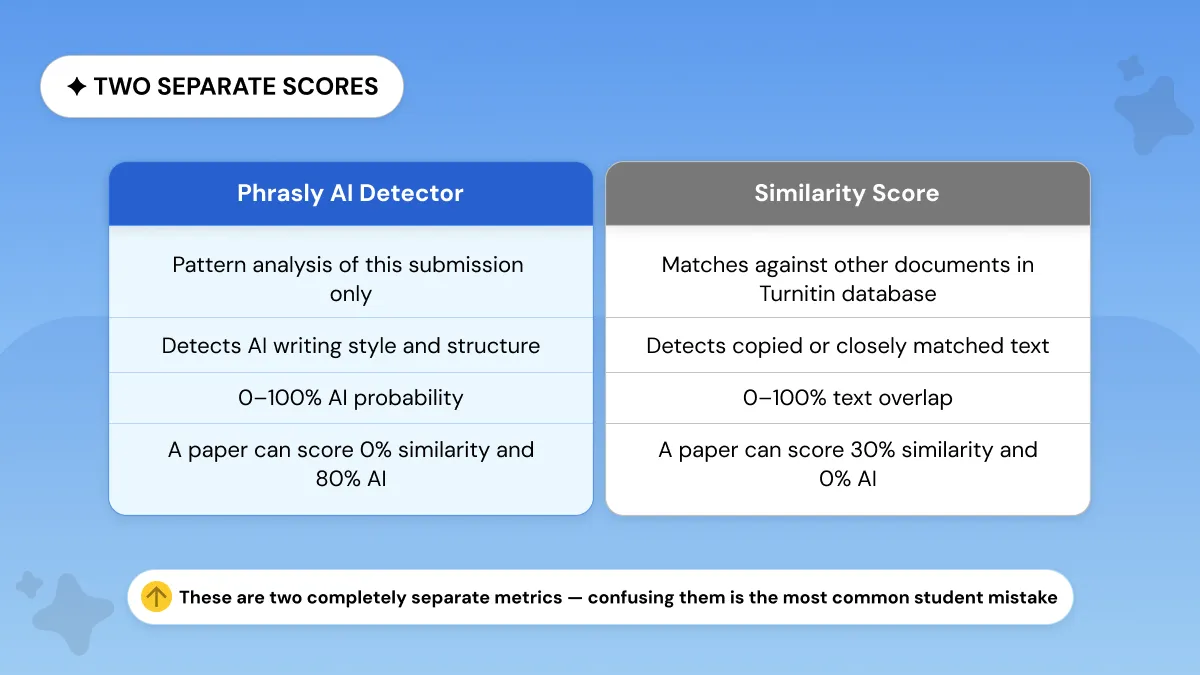
This is one of the most common misconceptions students have. AI Score and Similarity Score are completely different.
Similarity Score compares your text to existing sources and detects matching or copied content. For example, 20% similarity means 20% matches other sources.
AI score analyzes writing patterns within your document and detects whether the text looks AI-generated. AI score does not compare against external databases. You can have 0% similarity plus a high AI score (e.g., 80%).
Despite often being unique, AI-generated content can still contain patterns that are detectable.
Turnitin provides visual indicators when it generates an AI report:
- Blue percentage: Portion of text flagged as AI-generated.
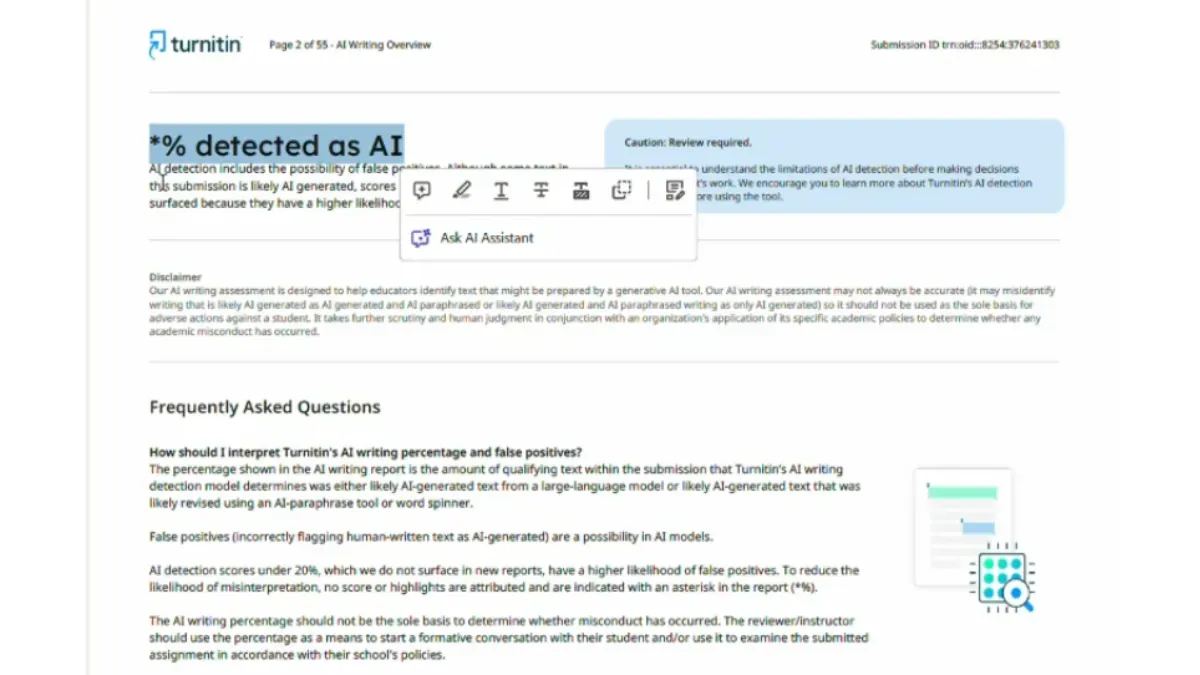
- Asterisk (*%): Appears in the 1–19% range. This is considered a high false positive zone. Turnitin acknowledges lower reliability here.
- Grey dashes (—): The system could not process the submission.
This will help you to understand how to read your report properly, particularly at lower percentages where results are inconclusive.
Does Turnitin Detect ChatGPT If You Paraphrase?
Yes! Turnitin can catch ChatGPT even when you paraphrase it. Turnitin has its own AI-paraphrasing detection layer that looks for tell-tale signs that text may have been rewritten by AI.
Detection gets significantly weaker the more humanly you rewrite content.
Turnitin distinguishes between two types of AI-related content in its report:
- Cyan highlights: Likely AI-generated (raw output)
- Purple highlights: Likely AI-paraphrased content
Rewriting AI-generated text will not necessarily eliminate detection markers. If patterns of phrases and sentence structure are too similar, Turnitin may recognize it as AI-written.
Can Turnitin detect ChatGPT if you rewrite it in your own words? When text is slightly edited, a lot of AI patterns (aka repetitive phrasing/style/formatting) will likely remain. Turnitin will probably continue to mark portions as AI paraphrased then.
However, when work is heavily rewritten in a human-like way, detection is much less consistent.
According to a study published by Temple University, Turnitin almost always correctly identified fully human or fully AI-generated texts but significantly struggled with hybrid content, where human and AI writing were mixed together.
This is not about “getting around” detection. It’s about understanding its limits. Turnitin can still flag lightly paraphrased AI content. But it becomes less reliable as content is genuinely rewritten or mixed.
This creates both missed detections (AI content not flagged) and false positives (human writing flagged incorrectly).
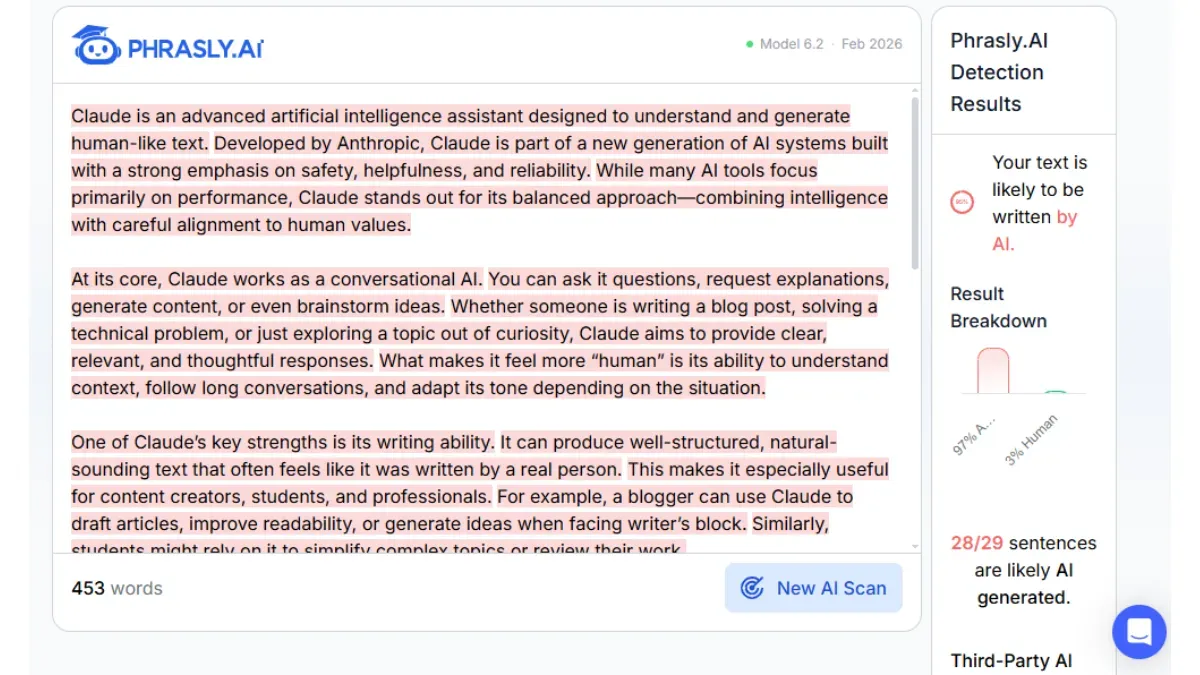
How Reliable Is Turnitin's AI Detection?
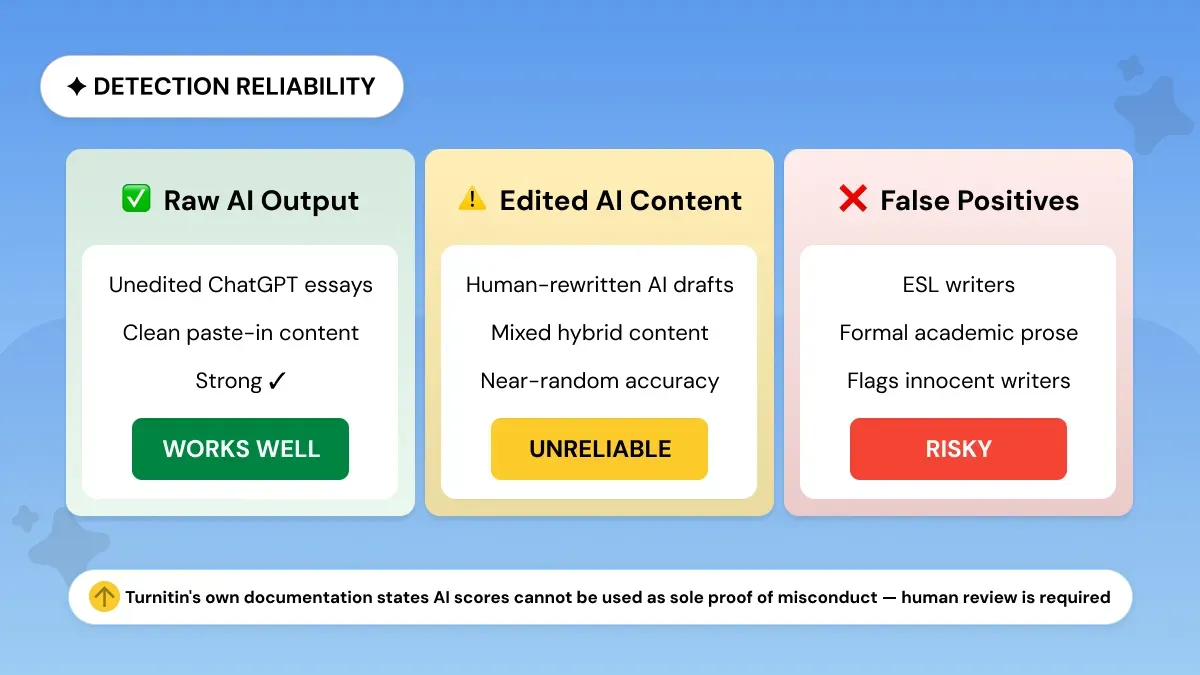
Turnitin's AI detection does work, but ranges from absurdly low to near 100% accuracy based on content and context. Turnitin's AI score should not be considered as evidence of academic misconduct.
The AI score is simply a hint for instructors to review, and should never be used as fact. No student paper should be acted upon without human review. Here's where it does work, where it doesn't, and the likelihood of AI detector false positives.
Where It Works?
Turnitin works best when fed unedited AI-generated content. Content such as text that's cut-and-pasted straight from ChatGPT. Under lab conditions, Turnitin has reached accuracy levels as high as 98%.
In these scenarios, raw AI content is reliably flagged, and detection scores correlate strongly with actual AI generation. This makes Turnitin effective for spotting straight AI paste in academic essays.
Where It Fails?
Turnitin’s performance drops significantly in several real-world situations:
Mixed or hybrid content: Human-edited AI text produces near-random detection results.
ESL writers / non-native English: Less linguistic diversity in sentence structure or word choice may lead to more false positives. AI-patterned writing can sometimes mimic the style of non-native speakers.
Formal academic writing: Very structured, jargon-filled, or templated human writing can appear AI-like. Sometimes this means that real human work can be flagged.
According to Turnitin's own data released in February 2026, approximately 15% of essay submissions between October 2025 and February 2026 had more than 80% AI-generated writing, up from just 3% in April 2023.
False Positives Are Real
Turnitin admits to a 1% false positive rate, which means that approximately 1 out of every 100 essays completely written by humans will turn up as AI-written.
Importantly, Turnitin states in their documentation that you cannot use AI detection as definitive evidence of wrongdoing. Any paper flagged by AI should be reviewed by a human before any academic integrity proceedings.
Before you submit, run your content through Phrasly AI Detector. See your AI score in seconds before Turnitin does.
What Happens If Turnitin Flags Your Work?
Just because Turnitin marks your paper as AI-generated when you wrote it by yourself does not mean you automatically failed for cheating. It means your writing was flagged for AI-like structures and must be reviewed by a human.
Can Universities See If You Use ChatGPT? Yes! Instructors can see AI detection results through Turnitin’s Similarity Check report. They are shown an AI percentage score and highlighted sections of text that appear AI-generated or AI-paraphrased.
Students typically won't see the entire AI report, though, unless their school grants access. Turnitin itself clearly states that AI detection results are not definitive proof of misconduct.
Instead, the score is a signal, not a verdict. Instructors are expected to review the work manually. Academic integrity decisions require context, discussion, and evidence. Therefore, if your content gets flagged, it is the beginning of a conversation, not the end of one.
What to Do If You Are Wrongly Flagged?
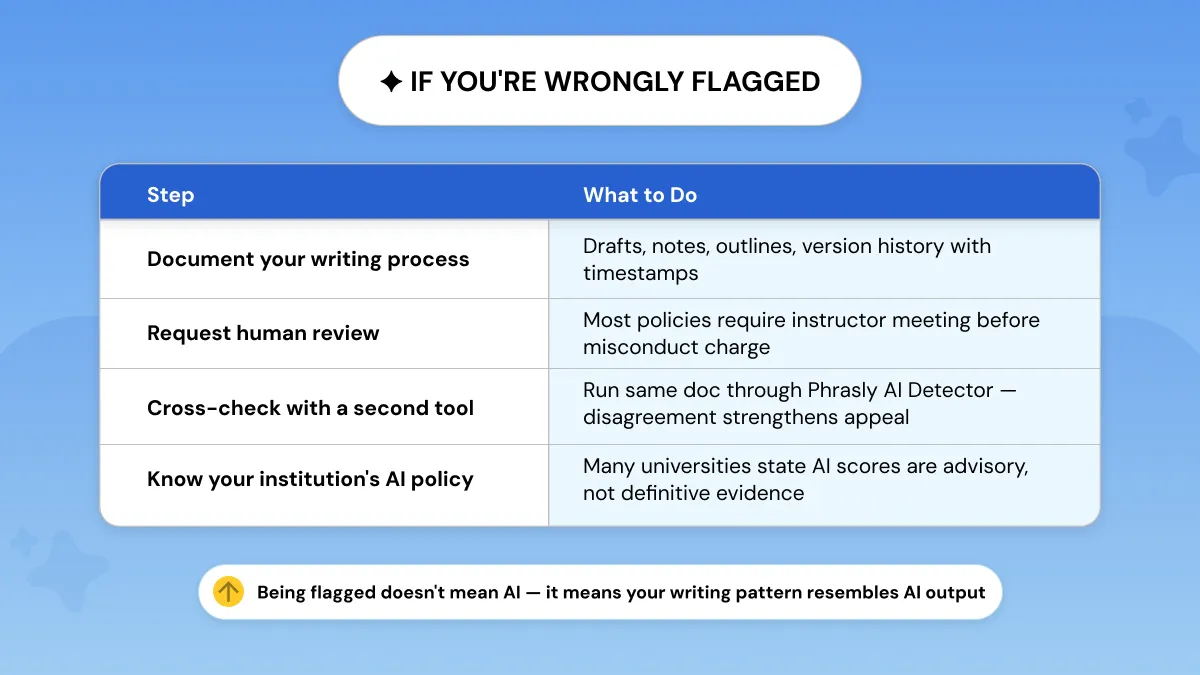
If you know your work is original, you can follow a straightforward, practical process. This is the point most students get stuck at: which is where evidence comes in handy.
Step 1: Document Your Writing Process: Keep proof that shows how your work developed over time, such as saved drafts, notes, and outlines, and Google Docs or Word version history with timestamp.
Step 2: Request a Human Review: Most universities require instructors to discuss the result with the student and review the work before filing any misconduct claim. Ask for a meeting and be ready to explain your writing process, and your sources, and your research.
Step 3: Cross-Check Your Score: Run your document through the Phrasly AI Detector to compare results. If multiple tools disagree, it strengthens your case. This proves that different AI detectors vary. This is helpful evidence when reviewing.
Step 4: Know Your Institution’s Policy: Many universities clearly state that the AI detection scores are advisory only. They cannot be used as standalone evidence. Review your school's academic integrity policy so you know your rights and the review process.
How to Reduce False AI Flags on Genuine Writing?
If your human-written work keeps getting flagged, remember that the objective is not to "beat" the system. It's to decrease false-positives by making your writing stylistically match natural human behavior.
If you are concerned that your writing style may cause false positives, the best solution is to review your content prior to submission. Run your work through Phrasly AI Detector for an early heads-up.
If your original, human-written content is scoring unexpectedly high, Phrasly AI Humanizer can help adjust sentence rhythm, structural variation, flow, and phrasing.
Crucially, this isn’t going to change your ideas or arguments. It just removes the pattern signals that AI detectors can misinterpret.
Some practical ways to reduce false positives are:
- Varying your sentence length intentionally: Mix short, direct sentences with longer, more detailed ones.
- Adding personal insights and original analysis: Include examples, opinions, or explanations that reflect your own thinking.
- Avoiding overly formulaic transitions: Overusing transitional phrases such as “In conclusion” or “Furthermore” can make your writing sound robotic.
- Writing in stages and keeping your drafts: Use Google Docs or Microsoft Word (with version history on).
They’re good writing practices that reduce your risk of false positives and help you write clearly, confidently, and authentically at the same time.
FAQs
Does Turnitin detect ChatGPT?
Yes! Turnitin can flag ChatGPT content. Turnitin identifies AI writing by looking for patterns common in language models. Turnitin is most effective when the AI-generated text has not been rewritten.
How does Turnitin detect ChatGPT?
Turnitin analyzes writing using patterns such as predictability (perplexity) and sentence variation (burstiness). Turnitin doesn’t match your work to sources. It analyzes whether your writing appears to be AI-written.
Can Turnitin detect ChatGPT if you paraphrase?
Yes, partially. Turnitin has a separate AI detection system that scans for AI-paraphrased text. However, it isn't very effective if you paraphrase too much and master the human style.
Is 25% on Turnitin too high?
It really depends. A 25% similarity score isn't necessarily bad. It depends on what was matched (quotes, references, common phrases, etc.). Read the report, looking at context, not just percentages.
Is a 23% similarity on Turnitin bad?
Not always. Similarity score is entirely different from the AI score. A paper can have 23% similarity and 100% human written depending on which sources were matched.
Can universities see if you use ChatGPT?
Yes. Instructors will see the results of AI detection in Turnitin's report, including percentage and highlighted text. Students typically can't view the report with AI information included unless allowed by their institution.
Does Turnitin detect ChatGPT 4 and ChatGPT 5?
Turnitin can recognize patterns from GPT-4 models. While it's likely that Turnitin can identify ChatGPT 5 outputs, there hasn't been any official announcement confirming this yet.
How can I check my content before submitting to Turnitin?
Try running your content through Phrasly's AI Detector before you hit send. You can lower false positives on your authentic content with Phrasly's AI Humanizer without altering your intent.
Turnitin does catch ChatGPT extremely consistently when it's pristine, unedited AI-generated text, but far less reliably when the text has been edited or otherwise altered/mixed with human-written text, or formatted in standard academic style.
False positives are very possible for formatted human writing. Not sure what score you’ll get before you submit?
If you find your real writing is being flagged, try the Phrasly AI Humanizer to vary your sentence structure and cadence without altering your ideas and arguments.


Keep reading

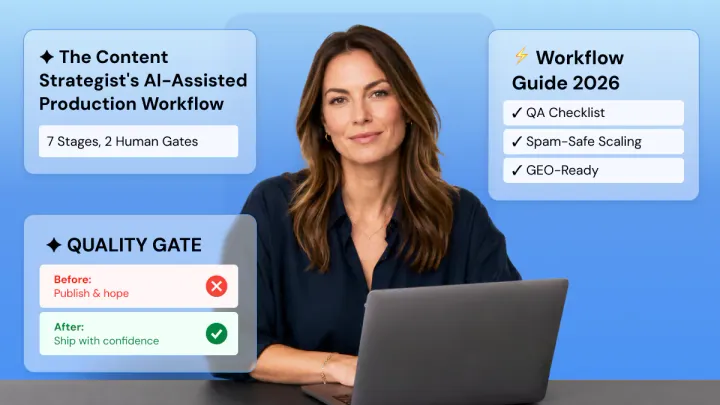
The Content Strategist's Workflow for AI-Assisted Production
A sound AI content workflow puts humans at the brief and expertise stages, letting AI handle outlining and drafting, then routes every piece through fact-checking, plagiarism, and AI-flatness QA gates before it can be published.

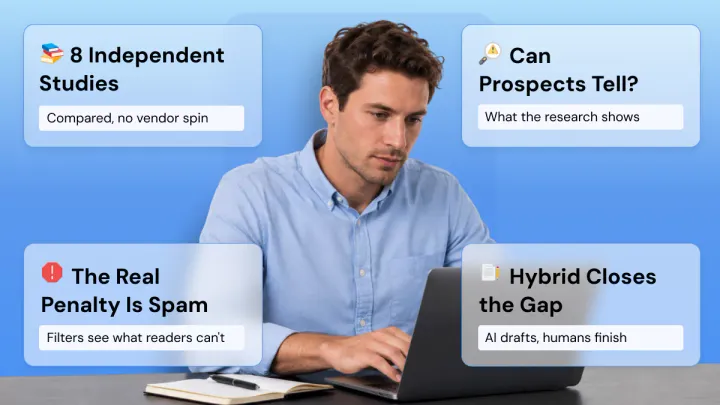
AI vs Human Cold Email Reply Rates: What 150M+ Emails Across 8 Studies Actually Show (2026)
AI cold emails get 1% fewer replies but 3x more spam flags. We compared 8 studies covering 150M+ emails, including peer-reviewed research, to show what actually works in 2026 and the fix that closes the gap.